State Audit Office of Vietnam
Portal



Supreme Audit Institutions (SAIs) represent important mechanisms in safeguarding public resources, and the broad authorities of the Comptroller of Israel are intended to, among other things, strengthen good governance. However, evaluating public audit effectiveness and its ability to enhance good governance is complex and often difficult, if not impossible. This article explores modeling to examine audit effectiveness, including an examination of influential factors and a comparison that uncovers the most impactful report type.

Corruption is associated with public property and private power. In accordance with the provisions of the 2013 Constitution, it can be seen that the National Assembly had taken a leading role in controlling state power as a whole and preventing and fighting against corruption in particular. However, the legal institutions of the National Assembly have not clearly showed its power and ability to exercise the rights in a practical and effective manner. Furthermore, in accordance with the 2018 Law on Anti-corruption (taking effect on 01 July 2019), the National Assembly does not have anti-corruption functions. Article 7 under the Law regulates that the National Assembly shall supervise anti-corruption works nationwide.
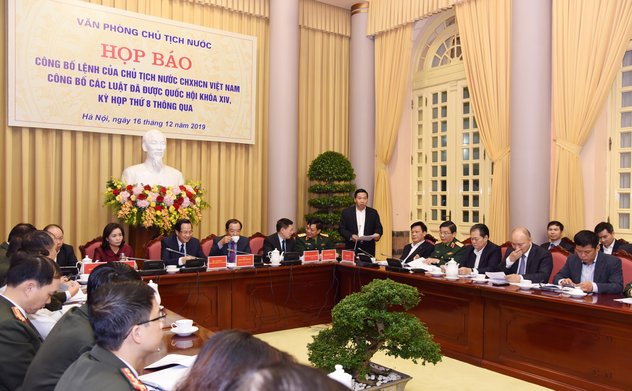
After 3 years of implementing the 2015 State Audit Law, the SAV has proposed financial settlement of more than VND 240,000 billion; propose amendments, supplements and cancellation of hundreds of legal documents which are no longer suitable in order to close the loopholes in mechanism, organize the implementation of the State's regulations to avoid loss, waste and contribute importantly to strengthen the national finance, tighten financial discipline, especially contribute positively to the process of institutional improvement in the country's development process. However, at the request of the renovation and improving the effectiveness of public finance, public assets surveillance and corruption prevention, the SAV has built and submitted to the National Assembly for approval of Law No. 55/2019 / QH14 dated November 26, 2019 amending and supplementing a number of articles of the 2015 SAV to improve the legal system of SAV, enhance the effectiveness and efficiency of SAV.
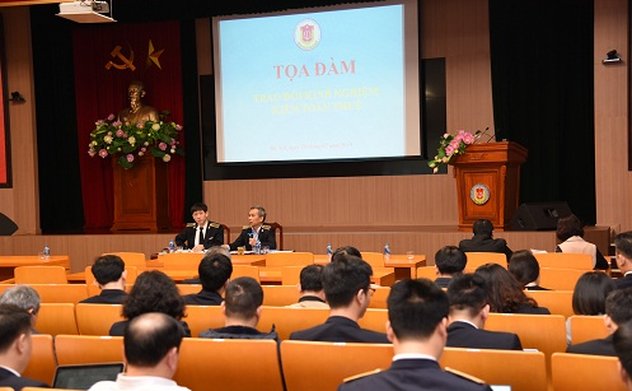
The world has entered the fourth industrial revolution (Industry 4.0) towards automation and data exchange in manufacturing technologies. As a contribution to this trend, the application of Information Technology (IT) in tax administration has played a significant role in the context of the increasing number of taxpayers, diversified scale and areas of operation. This is also posing many challenges for the State Audit Office of Vietnam (SAV) during the tax audit process.

Besides the continuous application of the Information Technology (IT) into the management, the State Audit Office of Viet Nam has also actively adopted advanced technologies into its audit activities. Since then, it has witnessed remarkable changes in its work, proving that the technologies shall become an important tool to improve the effectiveness of audit activities. This effort also reflects the SAV’s strong commitment, in capacity as the Asian Organization of Supreme Audit Institutions (ASOSAI) Chair for the period of 2018-2021, to innovating the audit methodologies.